NEW RULES AT NEW SPATIAL SCALES: VISUALIZING SCALE AND PERSPECTIVE-DEPENDENT EMERGENCE PRINCIPLES, 2026
Emergent phenomena tend to display the property of coarse-graining, where populations of system components can be observed to exhibit new behaviors in larger quantities, and therefore, display new system rules at larger spatial scales.
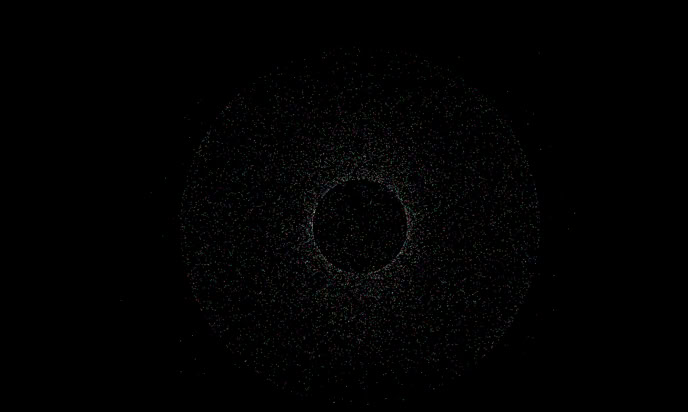
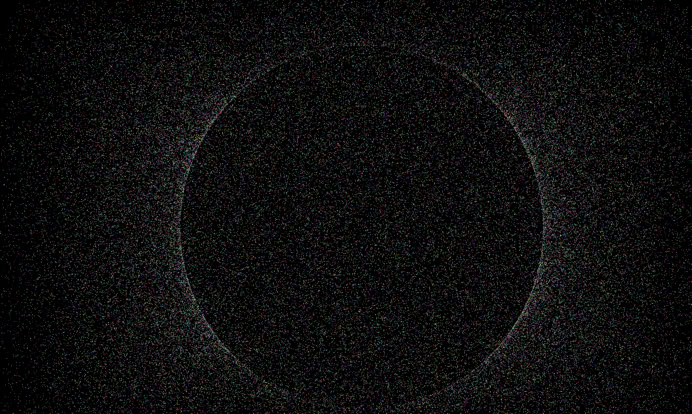
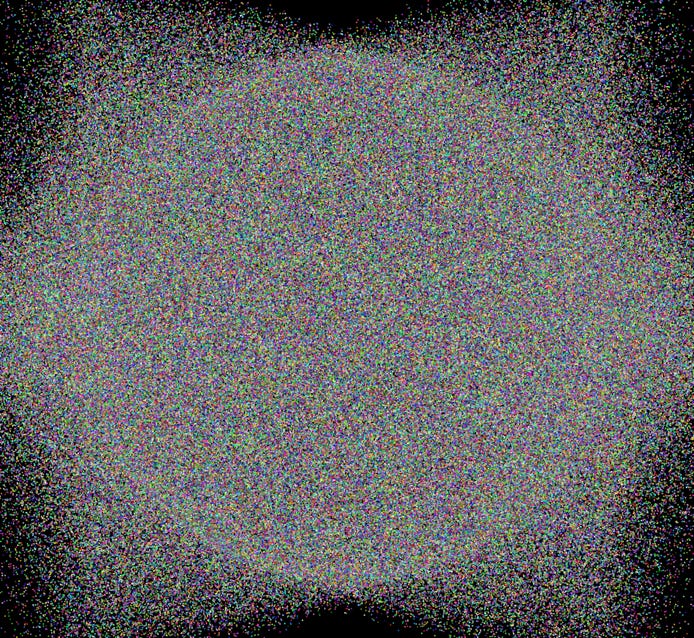
A simple, GPU-based particle simulation on MacOS is used to visualize this. As seen in the first video below, when the system is observed from a smaller spatial scale at approximately 30X zoom, hundreds of particles can be seen that would appear to predominantly adhere to the random walk equation, highlighted in green at the top of the window. However, upon zooming out to roughly 15X zoom and beyond, an observer would come to describe the system of particles and their motion logic as being governed by a wavelike equation, where the scale of a million particles is reached at 1X zoom. Although an observer would see something akin to a perspective and scale-based phase transition, both random walk and wave equations simultaneously govern the motion logic of the particles at all times. Therefore, coarse-grained phase transitions can be concluded to be an observer perspective-relative phenomenon of emergent systems.
The code can be found on Github at this link. Framework generation assistance was provided by the older but high quality tutorial series Working with Particles in Metal, as well as the Kodeco “Metal by Tutorials” Particle Systems chapter, and Grok v4.1 (xAI).
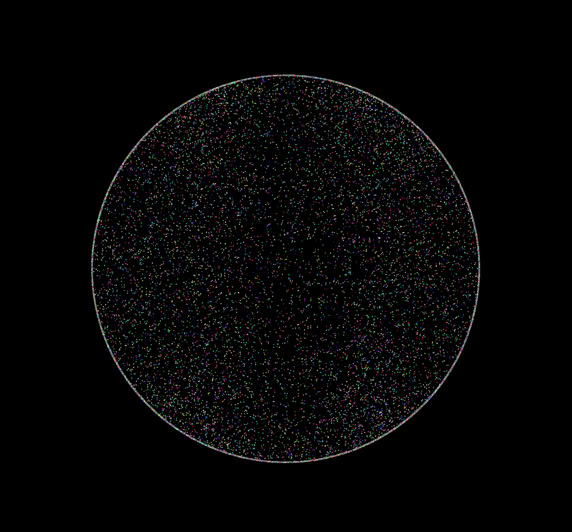
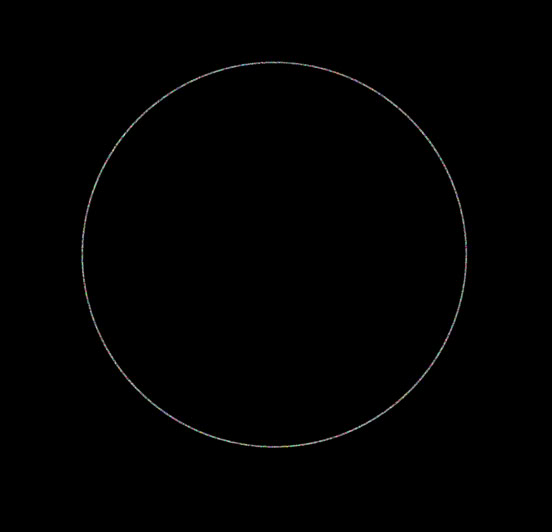
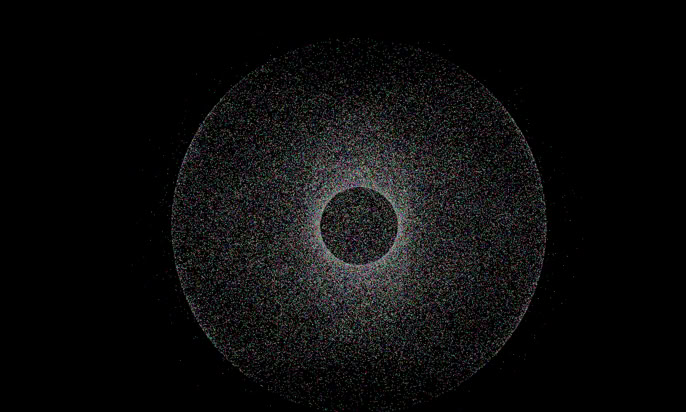
This prototype MacOS Metal application built upon prior GPU-based particle simulation work that allows a user to render and sculpt swarms of millions of particles into arbitrary geometries, seen below.